

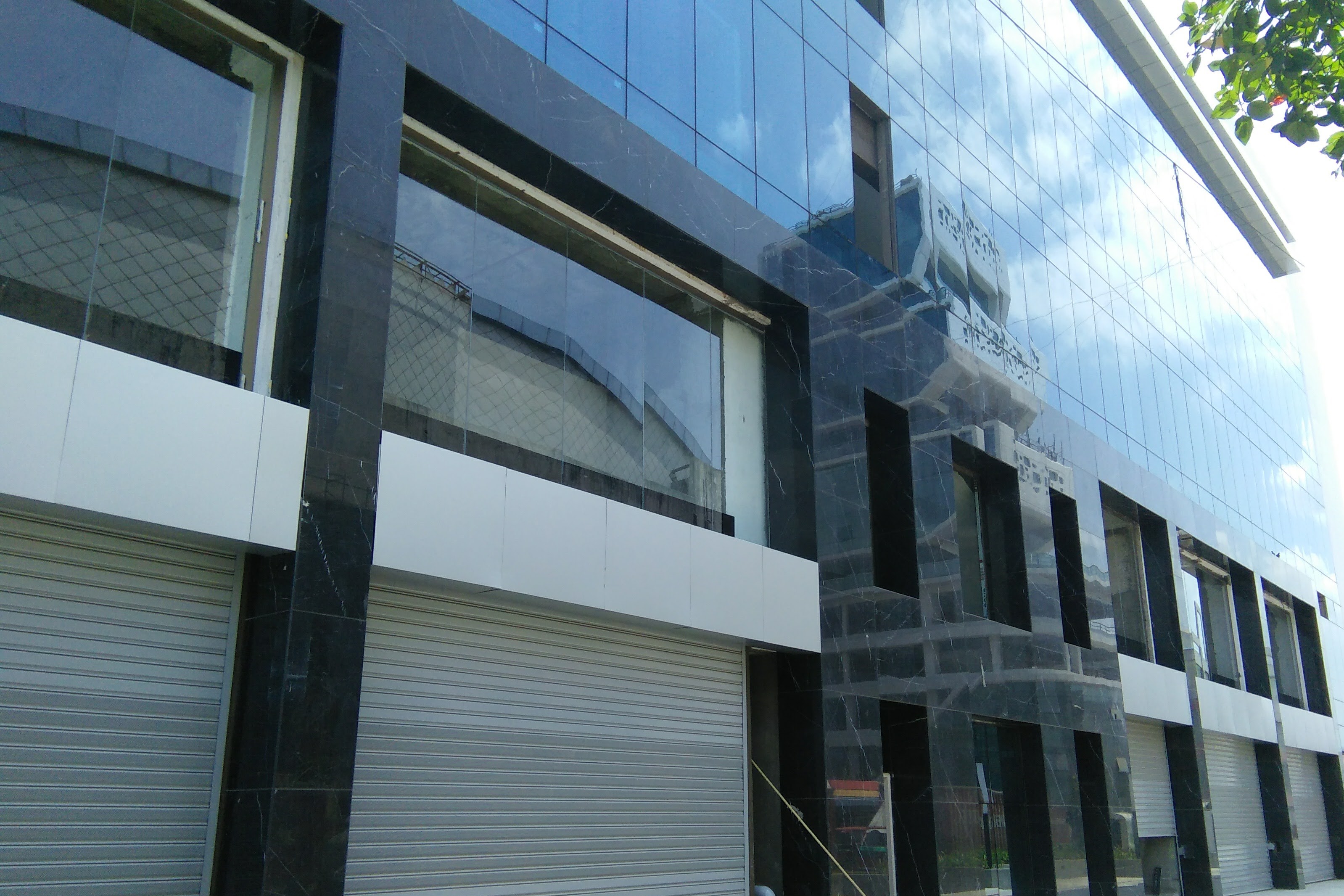
Stone and ACP are often presented as competing finishes, but they answer different briefs on weight, speed, joints and maintenance. The right choice is usually a hybrid: stone at podium and ACP on typical floors, or vice versa, depending on the architect's massing language.
Natural stone carries prestige and depth variation; it also demands heavier structure and more skilled setting labour, especially in wet-fixed systems. Dry cladding reduces wet trades but requires disciplined anchorage engineering.
ACP offers crisp lines, large modules and predictable lead times when brand supply chains are healthy. FR cores and metallic finishes have narrowed the perceived gap with stone at podium scales.
Thermal movement differs: stone panels are stiffer blocks while ACP cassettes float on rails. Movement joints must be coordinated with the structural engineer's slab deflection assumptions.
Monsoon performance is about details - flashings, drip edges, reverse laps and sealant geometry - regardless of skin material. A mediocre stone detail will leak as surely as a poor ACP joint.
Cost curves cross depending on height. Labour productivity for stone drops slower than ACP on complex geometries; flat fields favour ACP. We model both scenarios when clients are undecided.
Replacement and future modification are easier with accessible ACP cassettes; stone panel replacement is heavier but localized if the layout was documented during execution.
Acoustics and impact resistance may favour laminated glass spandrels combined with stone inside the lobby while ACP carries the field - hybrid envelopes are common in Mumbai towers.
We recommend mock-ups for either material when the elevation is brand-critical. Side-by-side stone and ACP samples on structure settle debates faster than render comparisons.
Shebi executes both systems regularly. If you share your elevation concept, we can outline pros, cons and indicative programme impacts without pushing a default material.
Sustainability conversations now include recycled content in aluminium skins and regional stone sourcing. We document chain-of-custody requests when projects pursue certification credits.
Ultimately the client should choose based on design intent, structure and lifecycle budget. We make execution predictable once that decision is made.