

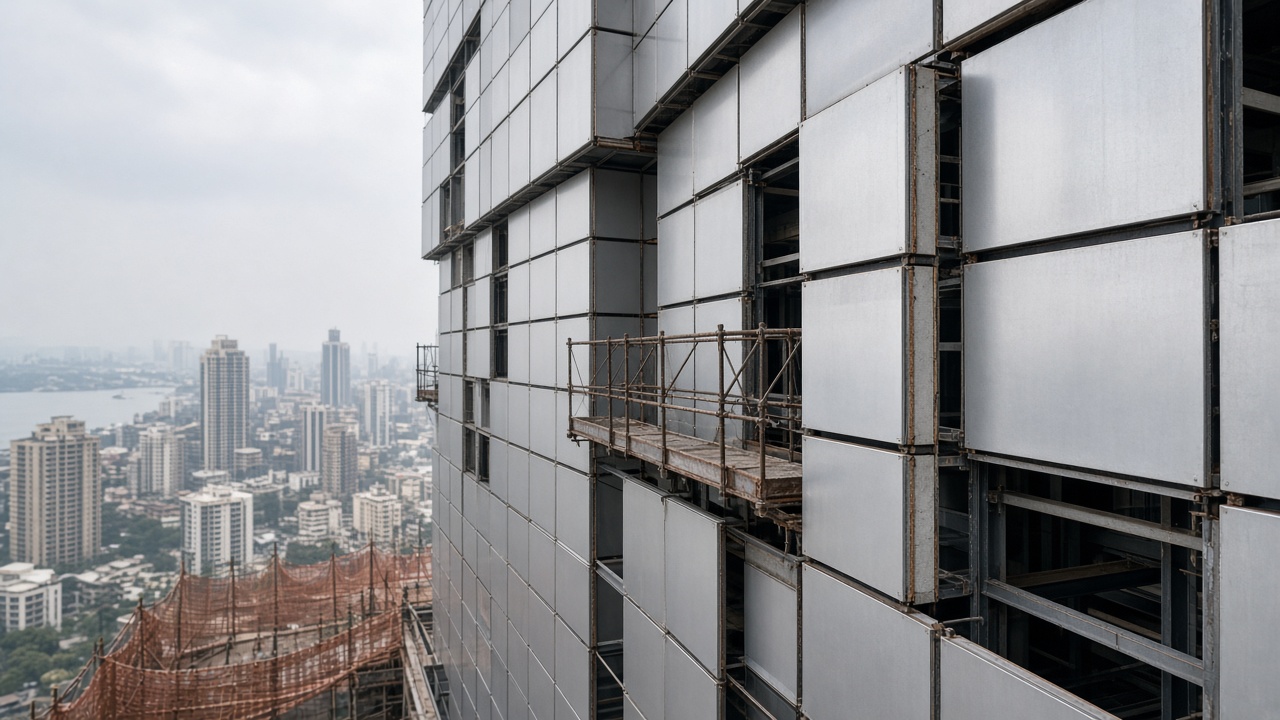
Fire-rated ACP (FR) is now a central conversation on Indian high-rise facades. Developers ask whether every elevation needs mineral cores, and contractors must prove that substitutions still meet the architect’s fire strategy. This guide summarises practical controls Shebi Enterprises uses on ACP cladding packages.
What “FR ACP” usually means on site
FR panels use a mineral-filled core designed for improved reaction-to-fire performance versus standard polyethylene cores. Thickness, coating system and installation detailing all matter. A FR sticker alone is not a facade fire strategy.
Documentation to keep with the BOQ
- Specified core type and thickness by elevation zone
- Manufacturer datasheets and batch traceability
- Approved sealants and cavity barrier notes
- Written VE log if brands change
Cost vs risk
FR material costs more than PE, but rework after a failed inspection costs more. For pricing context see ACP cladding price in Mumbai. Shortlist contractors who treat FR as process, not only procurement - our contractor shortlist guide helps.
Site controls that protect the intent
Store panels dry, reject damaged cores, keep joint sizes within spec, and never mix PE offcuts into FR zones. Train crews to read panel markings. After handover, inspection programmes under facade maintenance should note any field repairs that could compromise barriers.
Need help aligning FR specification with a buildable Mumbai programme? Contact Shebi Enterprises with your fire strategy extract and elevations.
FAQ
Requirements vary by occupancy and authority. Many high-rise residential and assembly buildings specify FR mineral cores - confirm project fire strategy.
Only with written approval against performance criteria. Document thickness, reaction-to-fire evidence and sealant compatibility.
No. Joints, cavity barriers and penetrations still decide real-world fire and smoke behaviour.